The Leadership Handoff: Why Small Business Succession Is Failing the Next Generation of Entrepreneurs

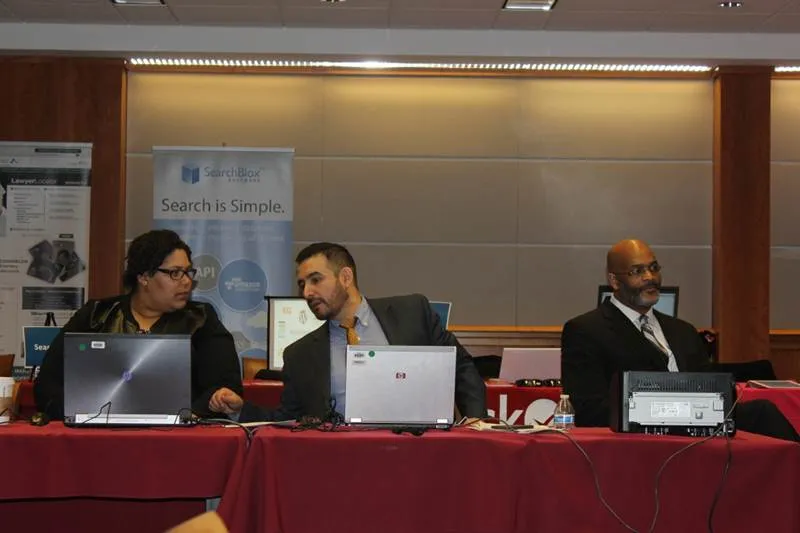
Photo: business mentor generational leadership meeting professional office, via marshpartners.com.au
America's small business community is in the midst of a generational transition that is proceeding with far less intention than the stakes demand. Over the next decade, the U.S. Census Bureau projects that more than half of the country's small business owners — the majority of whom are Baby Boomers — will reach traditional retirement age. Many will exit their businesses. Some will sell. Others will simply close.
What most will not do, if current trends hold, is transfer the accumulated leadership knowledge, industry relationships, and operational wisdom they have spent decades building.
This is not a small problem. It is a structural failure in the way American small business culture has approached the question of mentorship and succession — and it deserves an honest reckoning.
The Informal Mentorship Tradition Has Broken Down
For much of the twentieth century, small business knowledge was transmitted through proximity and relationship. A young entrepreneur who wanted to learn the retail trade worked under an experienced merchant. A future restaurateur spent years in the kitchen of an established operator before striking out independently. The mentorship was rarely formalized, but it was real, and it worked because the transfer of knowledge was embedded in the daily fabric of business life.
That transmission mechanism has eroded significantly. The consolidation of industries, the acceleration of business model disruption, and the geographic dispersal of entrepreneurial activity have all weakened the informal bonds through which business wisdom once traveled. Today's emerging entrepreneurs — particularly those in the millennial and Gen Z cohorts — are entering business ownership with strong technical skills, comfort with digital tools, and sophisticated consumer intuitions, but frequently without access to experienced mentors who can provide the kind of contextual, judgment-based guidance that no online course can replicate.
The result is a generation of capable but under-mentored business owners making avoidable mistakes, reinventing wheels that experienced predecessors could have handed them, and missing strategic opportunities that a seasoned advisor would have recognized immediately.
Succession Planning: The Gap Nobody Wants to Discuss
The problem is compounded by a pervasive reluctance among established small business owners to engage seriously with succession planning. Survey data from organizations including the Exit Planning Institute suggests that fewer than thirty percent of small business owners have a formal succession plan in place, despite the fact that business transition is, for virtually every owner, an eventual certainty.
The reasons for this avoidance are understandable. Succession planning forces owners to confront questions about mortality, identity, and the long-term viability of enterprises they have built through personal sacrifice. For many entrepreneurs, the business is not merely a financial asset — it is a defining element of who they are. Planning for its transfer or transition can feel like planning for personal diminishment.
But the cost of avoidance is borne not only by the retiring owner. It is borne by employees whose livelihoods depend on a smooth leadership transition, by communities that rely on locally owned businesses for economic stability, and by the emerging entrepreneurs who could have benefited enormously from a structured handoff of knowledge and relationships.
What the Next Generation Actually Needs
To address this gap effectively, it is important to understand what millennial and Gen Z business leaders are actually seeking — because their expectations differ in meaningful ways from those of their predecessors.
Emerging entrepreneurs in these cohorts consistently express a desire for mentorship relationships that are reciprocal rather than hierarchical. They want advisors who will engage with them as peers-in-development rather than as students receiving instruction. They value transparency about failure and uncertainty, not just curated narratives of success. And they expect the businesses they lead — or eventually inherit — to operate according to values that extend beyond profitability, including commitments to workplace culture, environmental responsibility, and community impact.
Established business owners who approach mentorship relationships with a rigid, top-down orientation are likely to find that their guidance goes unheeded — not because the next generation lacks respect for experience, but because the format of knowledge transfer matters as much as its content.
Additionally, younger entrepreneurs are navigating a business environment that is, in several important respects, genuinely different from the one their mentors built their careers in. Digital marketing, e-commerce logistics, remote workforce management, and the regulatory landscape around data privacy are all domains where the established generation may have less relevant expertise than the emerging one. Effective mentorship in this environment must be bidirectional — experienced owners sharing judgment and relationship capital while learning from younger partners about contemporary operational realities.
The Role of Professional Organizations
In the absence of robust informal mentorship traditions, professional organizations have both an opportunity and an obligation to build the infrastructure that the market has failed to provide organically.
National associations are uniquely positioned to facilitate structured mentorship programs that connect experienced business owners with emerging leaders across industries and geographies. Unlike informal mentorship, which depends on chance proximity, association-based programs can be designed with intentionality — matching participants based on industry relevance, business stage, and developmental goals, and providing frameworks that keep relationships productive over time.
Some of the most effective models currently in operation include cohort-based mentorship programs, where small groups of emerging leaders engage with a senior mentor over a defined period; reverse mentorship initiatives, where experienced owners gain exposure to digital tools and contemporary market dynamics through structured exchange with younger members; and succession planning workshops that provide both the technical guidance and the psychological support that owners need to engage with transition planning honestly.
NISBCO has observed that members who participate in structured mentorship programs report significantly higher confidence in their leadership decisions and are more likely to formalize their own succession plans than members who engage only in networking or informational programming. The connection between mentorship access and succession planning behavior is not coincidental — it reflects the reality that business leaders are more willing to plan for the future when they trust that the knowledge they have built will be received and honored by a capable successor.
An Urgent Call to Established Leaders
This moment demands something specific from America's established small business owners: a willingness to invest in the next generation with the same intentionality they applied to building their own enterprises.
Mentorship is not charity. It is a professional responsibility and, for many owners, an opportunity to extend the legacy of their business beyond their own tenure. The entrepreneurs who are entering the market today will shape the American small business landscape for the next thirty years. The quality of the guidance they receive now will determine, in no small part, the quality of that landscape.
Professional organizations like NISBCO are ready to provide the structure, the matching infrastructure, and the programming that makes this kind of mentorship scalable and sustainable. But the willingness to show up — to share hard-won knowledge with the next generation of leaders — must come from the established community itself.
The handoff is already underway. The only question is whether it will be conducted with the care and intentionality it deserves.